







Havok Sdk 2010 2.0-r1 [ 2K | 360p ]

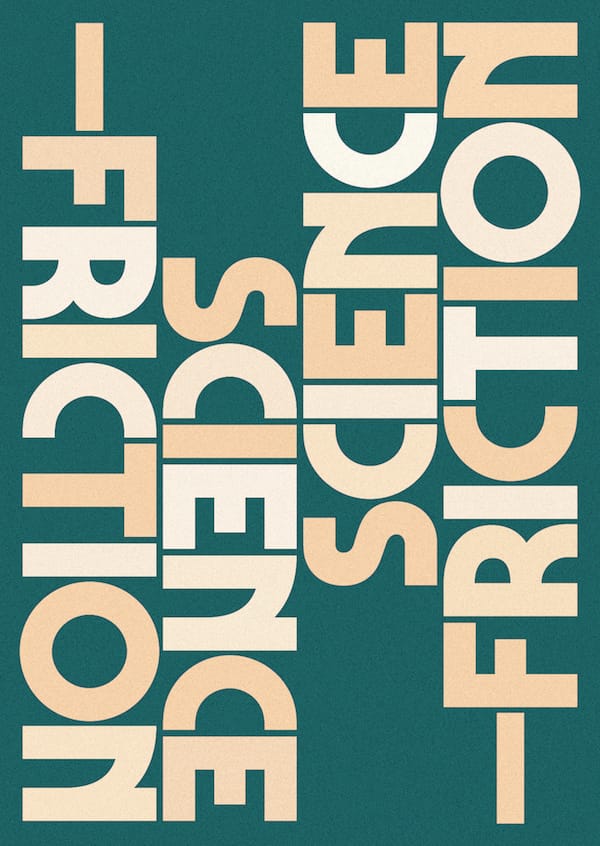
TIGHT SCIENCE
NOT TOUCHING
FICTION NOT

Now available in small sizes and in a range of weights

NEUTRAL ART
NOUVEAU 1984
UPPERCASE DECO
ONLY TO 2001
EFFORTLESSLY
MYSTERIOUS

but also more flexible with variable fonts

GEOMETRIC
BUT NOT REALLY
STRONG & STABLE

Supports Albanian, Belarusian, Bosnian, Croatian,
Czech, Danish, Dutch, Estonian, Filipino, Finnish,
French, German, Hungarian, Icelandic, Indonesian,
Irish, Italian, Latvian, Lithuanian, Norwegian Bokmål,
Polish, Portuguese, Romanian, Russian, Slovak,
Spanish, Swahili, Swedish, Welsh, Zulu, and More...

Die Flußwelt der Zeit Сънуват ли андроидите електрически овце?

TYPE YOUR OWN TEXT AND USE THE SLIDER TO CHANGE WEIGHTS & OPTICAL SIZES

Pro, Trial, Free: Take your pick

Licence type

Read the licence (390 words)

Licence for commercial use, desktop and web.

Try the full family for free with a limited character set. No commercial or personal use.

Full character set, free for personal use (Big Bold weight only).

Weight selection

Choose any combinations of Marvin Visions Big (for display use) and Small (for use at smaller sizes).
£19 per weight. Families come with discounts and matching variable fonts.

£95 (50% off)

£76 (33% off)

£38 (50% off)

Your details

You’ll receive your download link via email
Privacy Policy

Examples in use

havok sdk 2010 2.0-r1 havok sdk 2010 2.0-r1 havok sdk 2010 2.0-r1 havok sdk 2010 2.0-r1 havok sdk 2010 2.0-r1 havok sdk 2010 2.0-r1 havok sdk 2010 2.0-r1 havok sdk 2010 2.0-r1
havok sdk 2010 2.0-r1 havok sdk 2010 2.0-r1 havok sdk 2010 2.0-r1 havok sdk 2010 2.0-r1

Part 1: NOTES ON REVIVING MARVIN

This covers the making of Marvin Visions Bold, from idea to finished font, showing the different design decisions.

Read

Part 2: NOTES ON EXTENDING MARVIN

This describes the process of expanding Marvin Visions from one weight to a family with two variable axis as well as a short conversation with Michael Chave.

Read

Havok Sdk 2010 2.0-r1 [ 2K | 360p ]

During the early 2010s, Havok introduced "free" versions of their SDKs to the public to encourage adoption. Setting up the 2010.2 SDK involved:

For developers, the integration of Havok SDK 2010.2.0-r1 shifted how designers built levels. The SDK shipped with comprehensive plugins for major digital content creation (DCC) tools of the era, notably Autodesk Maya and 3ds Max.

By 2010, Havok was already the undisputed "gold standard" for real-time physics and collision detection. This was the era of the PlayStation 3 and Xbox 360, where players were starting to expect every crate to break realistically and every character to react to the environment with more than just a pre-baked animation. 2010 2.0-r1 havok sdk 2010 2.0-r1

: You must install the Microsoft DirectX SDK to handle rendering for the demos.

Support for soft body simulation and rope physics. B. Advanced Animation Capabilities (Havok Animation) During the early 2010s, Havok introduced "free" versions

Tools for inverse kinematics, blending, and compression. Havok Cloth: Realistic simulation of fabrics and garments.

Once collisions are confirmed, the hkDynamics module calculates real-time physical responses. By 2010, Havok was already the undisputed "gold

In the golden era of the seventh generation of video game consoles, realism became the ultimate benchmark for blockbuster titles. Developers were no longer just competing on texture resolutions and polygon counts; they were fighting to create worlds that felt heavy, reactive, and physically authentic.

The 2010.2.0-r1 SDK was built on a robust, platform-agnostic infrastructure. To integrate it into an engine:

In the years following this release, the physics middleware landscape shifted dramatically. Competitors like NVIDIA PhysX pushed hard into GPU-accelerated physics, and Microsoft eventually acquired Havok in 2015 to integrate its tech deeper into modern development toolsets.

By 2010, the Havok SDK had been under Intel’s ownership (acquired in 2007) and was heavily optimized for multi-core CPU architectures. The development team moved towards a more user-friendly API design, condensing and simplifying functions for the developer.

During the early 2010s, Havok introduced "free" versions of their SDKs to the public to encourage adoption. Setting up the 2010.2 SDK involved:

For developers, the integration of Havok SDK 2010.2.0-r1 shifted how designers built levels. The SDK shipped with comprehensive plugins for major digital content creation (DCC) tools of the era, notably Autodesk Maya and 3ds Max.

By 2010, Havok was already the undisputed "gold standard" for real-time physics and collision detection. This was the era of the PlayStation 3 and Xbox 360, where players were starting to expect every crate to break realistically and every character to react to the environment with more than just a pre-baked animation. 2010 2.0-r1

: You must install the Microsoft DirectX SDK to handle rendering for the demos.

Support for soft body simulation and rope physics. B. Advanced Animation Capabilities (Havok Animation)

Tools for inverse kinematics, blending, and compression. Havok Cloth: Realistic simulation of fabrics and garments.

Once collisions are confirmed, the hkDynamics module calculates real-time physical responses.

In the golden era of the seventh generation of video game consoles, realism became the ultimate benchmark for blockbuster titles. Developers were no longer just competing on texture resolutions and polygon counts; they were fighting to create worlds that felt heavy, reactive, and physically authentic.

The 2010.2.0-r1 SDK was built on a robust, platform-agnostic infrastructure. To integrate it into an engine:

In the years following this release, the physics middleware landscape shifted dramatically. Competitors like NVIDIA PhysX pushed hard into GPU-accelerated physics, and Microsoft eventually acquired Havok in 2015 to integrate its tech deeper into modern development toolsets.

By 2010, the Havok SDK had been under Intel’s ownership (acquired in 2007) and was heavily optimized for multi-core CPU architectures. The development team moved towards a more user-friendly API design, condensing and simplifying functions for the developer.